
What Does Boxing Out Mean in Basketball?
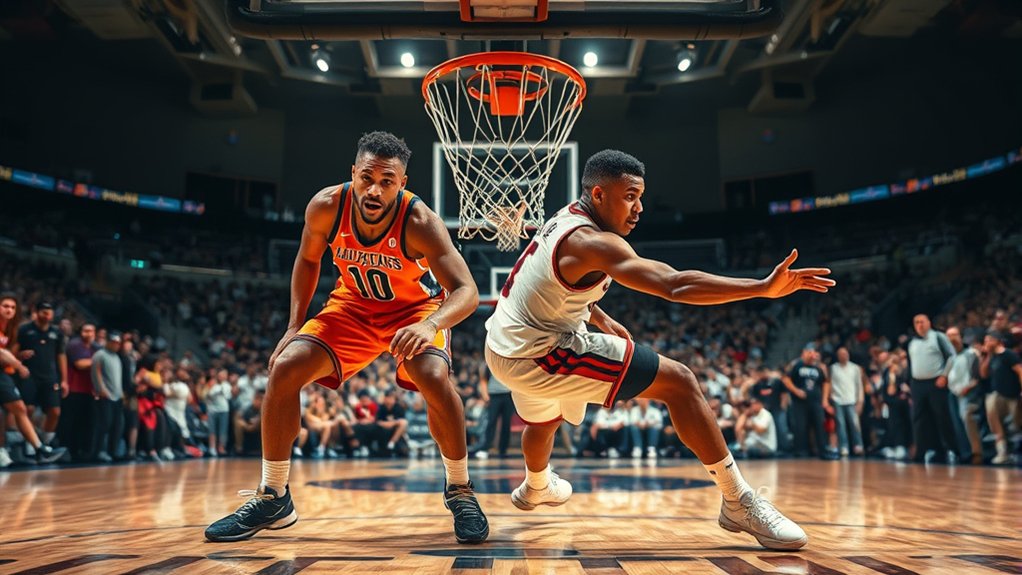
Boxing out in basketball means positioning yourself firmly between your opponent and the basket after a shot goes up, so you can grab the rebound. You’ll use your body to make contact, stay balanced with bent knees, and keep your arms extended to seal them out.
Yelling “SHOT!” helps your teammates prepare too. Mastering this skill boosts your team’s defense and controls second-chance points. Keep going, and you’ll discover how to perfect this essential move and why it matters for every player.
What Is Boxing Out in Basketball?
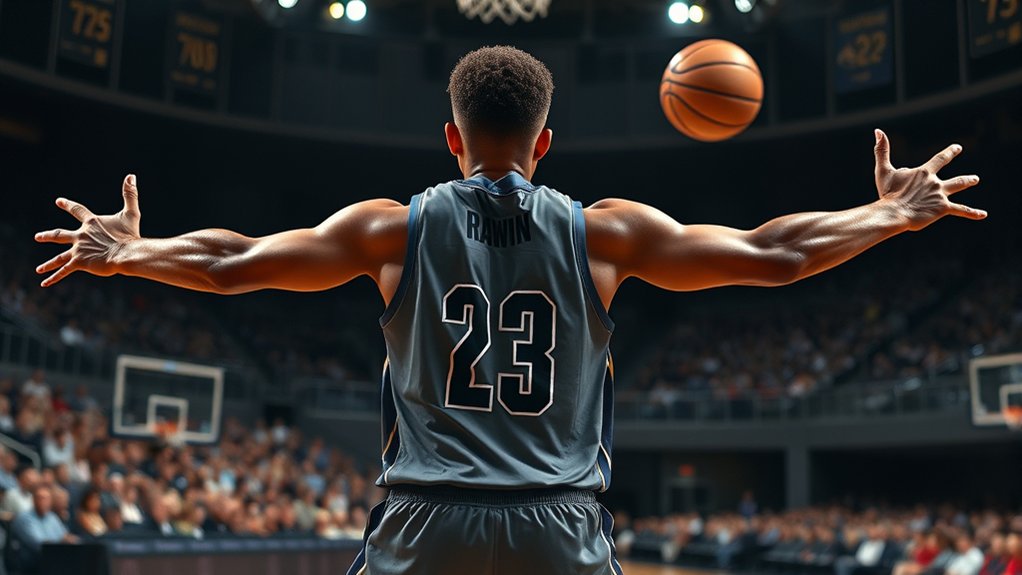
Boxing out in basketball is a key technique that helps you secure rebounds by positioning yourself between your opponent and the basket. When you box out, you make initial contact with your opponent, then turn to maintain that contact while driving them away from the basket.
This action guarantees you have the best chance to grab the rebound once the shot misses. You’ll often need to box out multiple opponents, especially after mid-range and three-point shots, where players cluster near the basket.
Coaches stress boxing out because it’s fundamental to preventing your opponents from grabbing second-chance points. By mastering boxing out, you not only improve your own rebound chances but also boost your team’s overall defense and control of the game.
Why Boxing Out Is Crucial for Rebounding Success
You need strong positioning to box out effectively and secure rebounds. It’s all about getting your body in the right spot before the ball comes off the rim. When you do that, you make it much harder for your opponents to get the ball.
Also, communicating with your teammates is key. By talking it out, you can decide who’s covering which opponent, so no one gets left open. This kind of teamwork really helps you maintain control under the basket.
In the end, all these little things add up. When everyone knows their role and works together, your chances of grabbing the ball after a missed shot go way up.
Rebounding Requires Strong Positioning
When a shot goes up, securing a rebound starts with positioning yourself between the basket and your opponent. You need to act fast, immediately moving into a strong boxing out stance with a wide base, bent knees, and arms extended to create space. This body positioning blocks your opponent’s path and gives you a clear advantage to grab the rebound.
Keeping contact with the offensive player helps you maintain control and prevents them from sneaking around you.
Teams that consistently box out like this improve their chances of securing rebounds and limit second-chance points for their opponents. By mastering this fundamental skill, you not only boost your individual rebounding success but also strengthen your team’s overall defensive effort.
Communication Enhances Team Coordination
Although securing a rebound relies heavily on positioning, effective communication among teammates plays an essential role in coordinating efforts.
When you call out “SHOT!” you alert your team to prepare for the rebound, making everyone more aware of the ball’s path. This communication helps you and your teammates quickly identify who’s responsible for boxing out which opponent, reducing scoring chances for the other team.
Consistent vocal interaction sharpens your team’s awareness and reinforces boxing out techniques during practice and games. It’s a simple but powerful way to keep everyone on the same page and ready to react.
Key points to remember:
- Yell “SHOT!” to boost readiness and focus.
- Assign clear boxing out responsibilities through communication.
- Use consistent calls to build muscle memory and accountability.
The Four Essential Steps to Box Out Properly
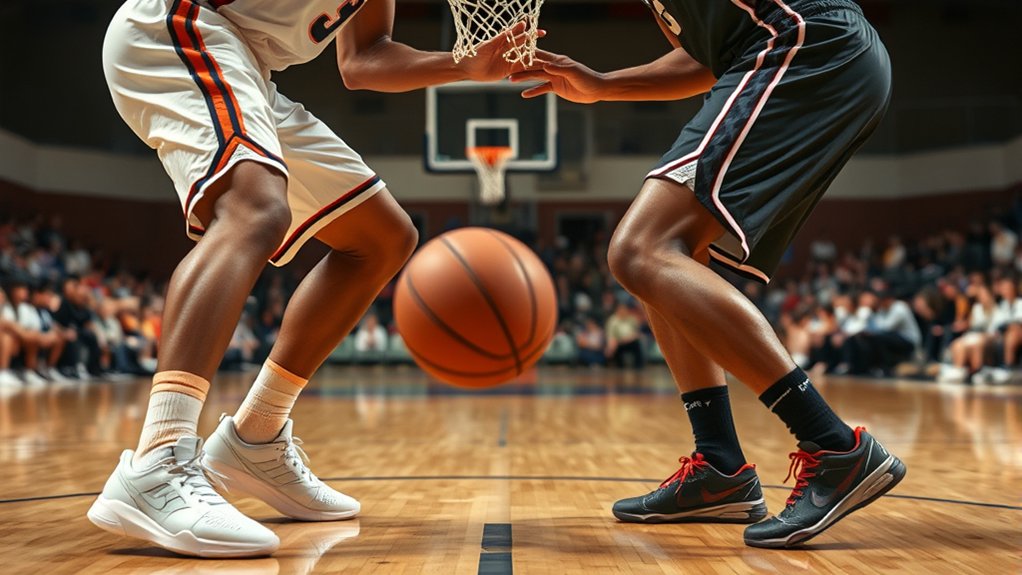
To box out properly, the first step is to nail that initial contact. Use your forearm to block your opponent’s path – it’s all about setting that strong foundation.
Next, you want to focus on positioning your body just right. This helps you maintain control and leverage over your opponent.
And finally, when the ball comes off the rim, stay aggressive and use both hands to grab that rebound.
Keep these steps in mind, and you’ll be boxing out like a pro in no time!
Initial Contact Techniques
Mastering initial contact sets the tone for successful boxing out. Your first move is to make firm contact using your forearm to halt the opposing player’s advance toward the basket. This vital moment establishes control and prevents the opponent from gaining better positioning.
Use these initial contact techniques to dominate the space: Deliver a strong, controlled forearm hit to stop the opposing player’s movement.
Maintain contact as you pivot, turning your body to position your backside against the opponent. Use short, powerful steps to drive the opposing player away from the basket.
Body Positioning Strategies
Effective boxing out hinges on solid body positioning, which involves four essential steps: Hit, Turn, Drive, and Pursue. You start by hitting the opponent with your forearm to claim your spot. Then, turn your body to press your backside against them, maintaining control.
Next, drive with short, powerful steps to push them away from the basket. Finally, pursue the ball aggressively using both hands. Maintaining an athletic stance, with feet shoulder-width apart and knees bent, throughout is key to staying balanced and effective.
| Step | Action | Purpose |
|---|---|---|
| Hit | Make forearm contact | Establish position |
| Turn | Rotate body, press backside | Control opponent’s movement |
| Drive | Use short, forceful steps | Create space near the basket |
| Pursue | Reach for the ball with both hands | Maximize rebound chances |
| Stance | Feet shoulder-width, knees bent | Maintain balance and strength |
Securing The Rebound
Securing the rebound starts the moment the shot goes up, and you need to act quickly using four essential steps: Hit, Turn, Drive, and Pursue.
First, Hit by making contact with your forearm to stop your opponent’s movement. Then, Turn your body to keep your backside firmly against them, gaining the best position.
Next, Drive with short, powerful steps to push them away from the basket, creating space. Finally, Pursue the ball with both hands as soon as it’s available.
Mastering these steps boosts your chances of securing the rebound and limits the other team’s scoring opportunities.
- Establish contact early with Hit
- Maintain position through Turn
- Create space by driving away opponents
Using Your Body to Seal Opponents When Boxing Out
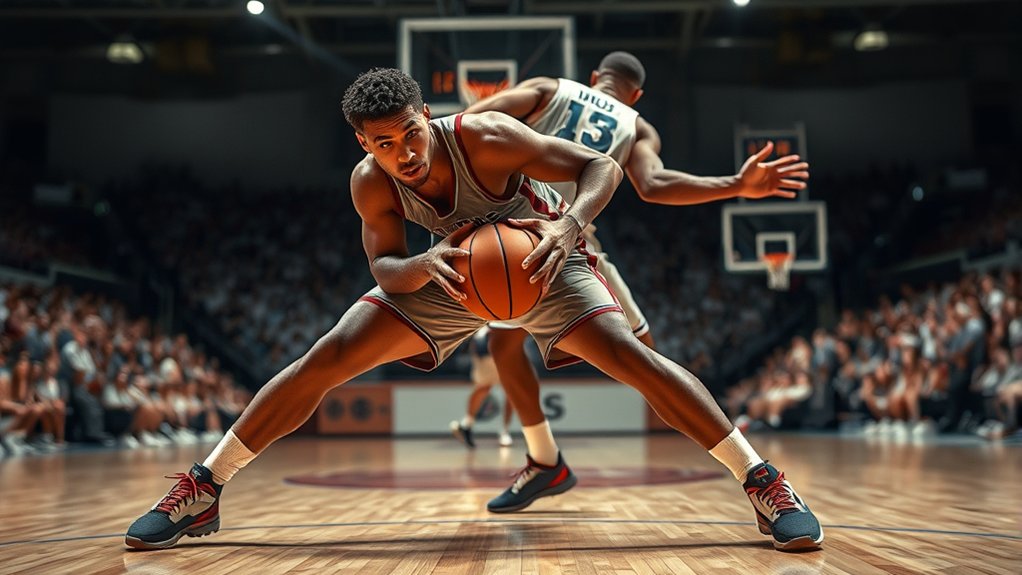
When you box out, using your body to seal opponents is essential for controlling rebounds. Start by adopting an athletic stance with wide feet, bent knees, and extended arms to gain leverage. Staying low helps you maintain balance and prevents opponents from pushing you aside easily.
Keep constant contact with your opponent, so you can sense their movements and adjust your position accordingly. Shuffle left or right as needed to stay between your opponent and the basket. Make sure you’re always in the ideal spot for grabbing the rebound.
Effective boxing out relies on strength and smart body positioning to block your opponent’s path. By mastering these techniques, you’ll improve your ability to secure rebounds and give your team an edge.
Mastering strength and positioning in boxing out enhances your rebound control and boosts your team’s performance.
It really comes down to using your body wisely and staying alert on the court.
Why and When to Yell “Shot
When you yell “Shot!”, you immediately let your teammates know to get ready for the rebound.
This quick heads-up boosts everyone’s awareness and helps them position themselves just right.
It’s a simple way to keep your team coordinated and ready to control the ball.
Alerting Teammates Quickly
Although it might seem like a small detail, yelling “SHOT!” quickly can make a big difference in how your teammates react during a game. By alerting teammates immediately, you help them prepare for the rebound and position themselves effectively. This is true even if they don’t have a clear view of the shot.
This quick communication creates urgency and encourages everyone to box out and secure the ball. When you alert teammates, the whole team coordinates better, which helps reduce second-chance points for opponents.
Remember, consistent shouting keeps your defense sharp and responsive.
- Aids teammates get ready for rebounds
- Encourages effective boxing out
- Boosts team urgency and coordination
Alerting teammates quickly guarantees your team stays one step ahead after every shot.
Enhancing Team Awareness
Yelling “SHOT!” does more than just alert your teammates quickly. It sharpens the entire team’s awareness on the court. When you call out “SHOT!”, you help teammates who mightn’t see the ball clearly prepare for the rebound.
This boosts team awareness by ensuring everyone knows a shot attempt is underway. That way, they can position themselves to box out effectively. Increased team awareness leads to better coordination, especially in high-pressure moments.
It allows your team to secure rebounds and limit second-chance points for opponents. By consistently communicating shot attempts, you reinforce your team’s defensive strategy. This makes it harder for the other side to capitalize on missed shots.
Common Boxing Out Mistakes
Mastering the box out requires more than just positioning; you need to maintain contact and stay alert. One common boxing out mistake is turning away from your opponent too early, letting them slip by for the rebound. You also must yell “Shot!” to alert teammates and prepare everyone to box out effectively.
Effective boxing out means maintaining contact, staying alert, and calling out “Shot!” to alert teammates.
Neglecting initial contact before turning is another error that weakens your box out. Watch out for these common pitfalls:
- Turning away too soon, losing position.
- Failing to call out “Shot!” and coordinate.
- Running under the basket instead of holding outside.
Avoiding these mistakes strengthens your boxing out skills, helping your team control rebounds and limit second-chance points.
Stay disciplined, use your legs to push opponents away, and keep your eyes on the ball. It’s all about effort and focus out there.
Which Basketball Positions Benefit Most From Boxing Out
When you step onto the court, post players like power forwards and centers benefit the most from boxing out because their size and reach give them a natural edge near the basket. These players are typically responsible for securing rebounds and preventing offensive rebounds that lead to second-chance points.
But boxing out isn’t just for big players. Perimeter players also need to master this skill to compete against taller opponents during rebound battles. Coaches stress that all positions should develop boxing out techniques to improve team performance.
By effectively boxing out, you can reduce opponents’ chances of grabbing offensive rebounds, limiting their scoring opportunities and helping your team control the game flow.
How Boxing Out Boosts Defense and Rebounding
Boxing out strengthens your defense by firmly positioning you between the opponent and the basket. This makes it harder for them to grab rebounds.
When you box out, you use your body strength and maintain contact to anticipate your opponent’s moves. That boosts your chances of securing possession after a missed shot.
This disciplined approach helps your team reduce second-chance points and improves overall rebounding stats.
Key benefits of boxing out include:
- Limiting opponents’ scoring opportunities by controlling rebounds
- Enhancing your ability to react quickly to loose balls
- Creating space for yourself or teammates to grab rebounds
Drills to Master Boxing Out
To improve your ability to control rebounds and maintain strong defensive positioning, practicing specific drills is key. Start with partner drills where one player shoots while the other works to box out. This simulates real game situations and boosts your situational awareness.
Try the Box Out Circle drill: players form a circle and take turns boxing out an incoming ball. This helps hone proper positioning and contact techniques. It’s a simple way to get comfortable with the fundamentals.
Rebounding Battles are excellent for competition. They force players to fight for rebounds and practice boxing out under pressure. You’ll learn how to stay strong when it really counts.
You can also engage in 3-on-3 half-court scrimmages focused on boxing out after every shot. This helps players apply the skill in a competitive setting. Plus, it’s a great way to get game-like experience.
Finally, use Box Out Boards to build strength and refine your contact skills against a padded wall. It’s a solid drill for improving your physicality on the court. Give it a try to boost your boxing out game.
Coaching Tips to Reinforce Boxing Out
Although mastering the drills is essential, you need to consistently reinforce boxing out during practice to build muscle memory and emphasize its importance.
Make sure your players yell “Shot!” as soon as a teammate takes a shot to trigger immediate boxing out. Teach them to maintain an athletic stance and establish contact early to secure their position.
Use game-like scenarios to highlight boxing out’s role, rewarding successful efforts to keep motivation high.
Incorporate boxing out drills regularly for muscle memory. Use real-game situations in practice to stress boxing out importance.
Clearly differentiate boxing out from rebounding during feedback sessions.
Frequently Asked Questions
Can Boxing Out Cause Fouls During a Game?
Yes, boxing out can cause fouls during a game if you use excessive force or illegal contact.
To focus on foul prevention, make sure you establish position without holding, pushing, or extending your arms too much.
Stay stationary and maintain a legal stance to avoid turning your back or committing an illegal screen.
Understanding these rules helps you box out effectively while keeping fouls off your record.
How Does Boxing Out Differ Between Men’s and Women’s Basketball?
When it comes to boxing out, you’ve got to play it by ear because physical differences between men’s and women’s basketball shape how you do it.
Men’s games often demand more brute strength to hold your ground against taller, more physical players.
In contrast, women’s basketball leans on strategic positioning and teamwork to box out effectively.
You’ll notice less raw power and more finesse in women’s rebounding tactics, making each play a chess match.
What Equipment Can Help Improve Boxing Out Technique?
You can improve your boxing out technique by using training aids like resistance bands to build leg strength and stability.
Weighted vests add extra resistance, helping you develop power to hold your position.
Rebounders and shooting targets simulate shot attempts, so you can practice boxing out consistently.
Setting up cones sharpens your spatial awareness.
Video analysis tools let you review and refine your form for better execution every time.
These tools really help you see what you’re doing right and where you can improve.
Are There Professional Players Known for Exceptional Boxing Out Skills?
Yes, you’ll find several professional players famous for their boxing techniques.
Dennis Rodman, for example, mastered boxing out to dominate rebounds.
Dwight Howard uses his size and strength effectively to box out opponents.
Kevin Garnett’s relentless energy made his boxing out skills stand out, while Charles Barkley showed how technique beats height.
Ben Wallace’s defensive prowess also relied heavily on solid boxing techniques to control the paint and secure rebounds consistently.
How Does Boxing Out Impact Team Chemistry on the Court?
Boxing out transforms chaotic rebounds into a ballet of trust and timing, directly boosting team dynamics.
When you consistently box out, you create a silent communication channel with your teammates, anticipating each other’s moves. This discipline builds confidence and unity, turning individual effort into collective strength.
Your team’s chemistry flourishes as everyone knows their role in defense. It makes your squad more cohesive and ready to seize every possession together.
It’s amazing how something as simple as boxing out can bring a team closer and make a real difference on the court.
Conclusion
Mastering boxing out isn’t just about grabbing rebounds. It’s about owning your space and controlling the game. When you box out right, you’re not just blocking opponents. You’re setting yourself up for success every time the ball hits the rim.
The funny thing is, the better you get at boxing out, the more natural it feels. It’s almost like a second instinct. So get out there, lock in, and watch how your rebounds and your confidence skyrocket.


