

What Makes a Boxing Bag a Good Workout?
A boxing bag gives you a dynamic full-body workout that tones muscles, boosts strength, and sharpens coordination. Each punch engages your arms, shoulders, core, and legs while your feet keep moving to maintain balance. It also fires up your heart rate for a fat-burning cardio blast.
By mixing powerful strikes with brief rests, you burn more calories in less time. Stick with it, and you’ll uncover how to maximize these benefits safely and effectively. Give it a try, and you might be surprised at how quickly you see results!
How a Punching Bag Works Your Whole Body
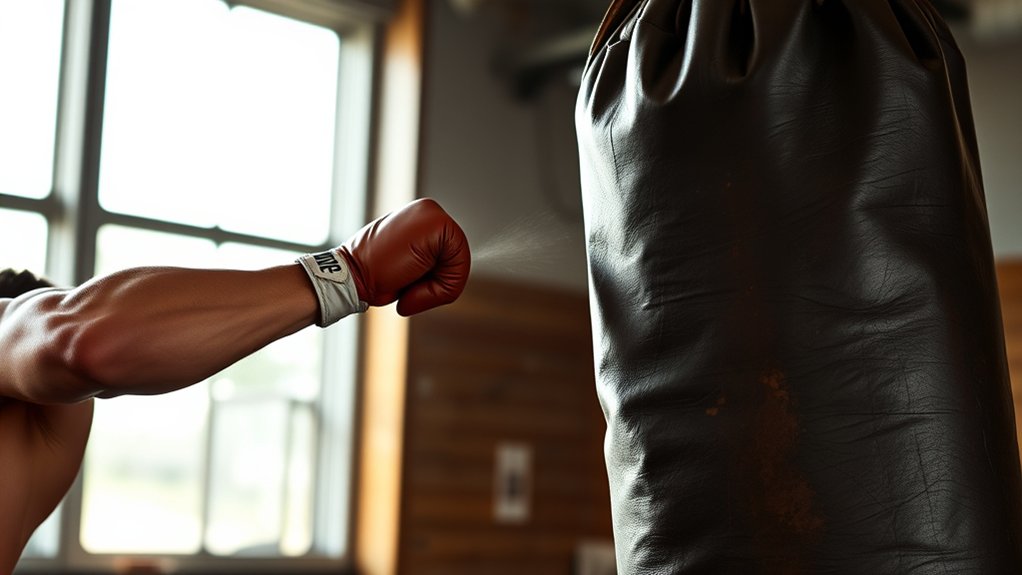
Because striking a punching bag works multiple muscle groups at once, you engage your arms, shoulders, chest, back, and legs in a full-body workout.
This punching bag workout doesn’t just tone your muscles. It also strengthens your core as you stabilize each punch, improving balance and coordination.
The resistance from the bag adds intensity, helping you build strength while you burn fat. Plus, the dynamic movement requires constant footwork, activating your entire body continuously.
By combining muscle engagement with movement, this full-body exercise turns into an effective cardio workout.
It raises your heart rate and maximizes calorie burn. So, when you hit the bag, you’re not only sculpting muscles but also enhancing your overall fitness efficiently.
It’s a great way to get a full-body workout that’s both fun and effective.
Why Punching Bags Boost Your Cardiovascular Fitness
When you punch a bag, your heart rate shoots up quickly. This turns your workout into an intense cardio session that boosts your cardiovascular fitness.
Punching bags are great for high-intensity interval training (HIIT), pushing your heart and lungs to work harder. This not only improves your aerobic capacity but also increases oxygen flow to your muscles, which helps enhance stamina.
Punching bags boost heart and lung power, enhancing aerobic capacity and muscle oxygen flow for better stamina.
You can burn calories efficiently, about 450 per hour for a 70kg person. That makes it excellent for weight management.
The rapid, powerful movements keep your metabolism elevated, so you keep burning fat even after your workout ends.
How Heavy Bag Workouts Build Muscle Strength
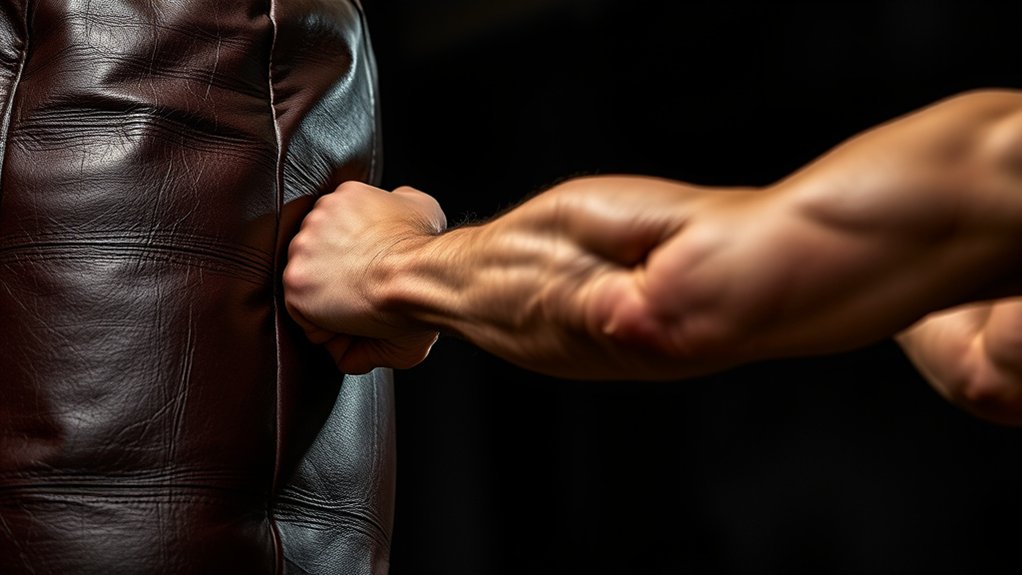
When you hit the heavy bag, you’re really working your upper body muscles—think arms, shoulders, and chest—with every punch.
But it’s not just about your arms. Your core and legs also kick in to help keep you balanced and to generate power.
Upper Body Engagement
Although heavy bag workouts focus on more than just cardio, they excel at building upper body muscle strength by engaging your arms, shoulders, and chest with every punch.
When you hit the heavy bag, the resistance forces your muscles to work harder than shadowboxing, boosting your punching power and endurance.
Each jab, cross, and hook targets different upper body muscles, helping you develop balanced muscle strength and definition, especially in your biceps and triceps.
Over time, consistent heavy bag training not only enhances your muscle tone but also improves your overall punching power.
This makes the heavy bag an effective tool for strengthening your upper body while refining your technique and stamina.
It’s a great way to build strength and get better at your punches all at once.
Core And Leg Activation
Because heavy bag workouts require twisting and stabilizing with every punch, they effectively engage your core muscles, boosting strength and stability. This core strength is essential for maintaining balance and generating power in each strike.
The resistance you face when hitting the bag also activates your leg muscles, especially the quadriceps, hamstrings, and calves, building endurance and strength.
Adding kicks to your routine intensifies this effect, promoting muscle growth in both your legs and core through dynamic, full-body engagement.
This thorough activation not only enhances muscle power but also improves coordination and definition across multiple muscle groups.
How Striking a Punching Bag Improves Balance and Coordination
Striking a punching bag forces you to constantly adjust your body position to maintain balance as the bag moves with each punch.
This dynamic interaction challenges your balance control, making you engage your core and legs to stay grounded.
As you strike, you develop better coordination by syncing your hand, foot, and eye movements to hit a specific target area accurately.
The workout’s fast pace requires shifting your weight and footwork, which sharpens your overall coordination.
Each punch delivers instant feedback, helping you refine your aim and striking precision.
Over time, this consistent practice improves your ability to maintain balance while delivering powerful punches.
So, your workout becomes not only effective for strength but also great for enhancing your body’s coordination and stability.
It’s pretty cool how something as simple as hitting a bag can do all that!
Why Interval Training on a Punching Bag Burns More Fat
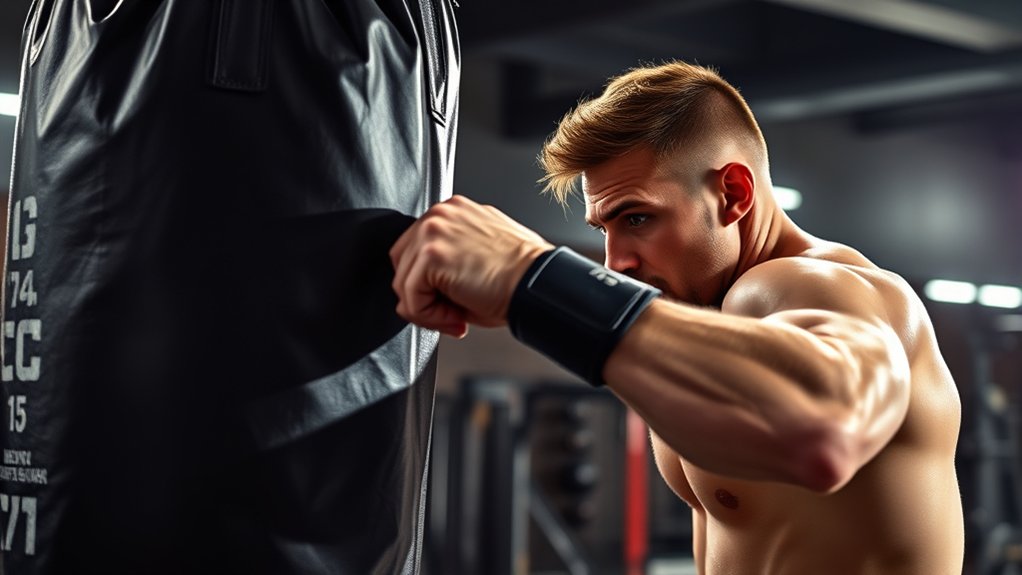
When you switch back and forth between quick bursts of powerful punches and brief breaks on the punching bag, you’re really pushing your body to burn calories more efficiently.
It’s like giving your heart a workout that keeps it beating faster.
And the best part? This interval training doesn’t just work while you’re punching.
It keeps your metabolism revved up even after you’ve stopped.
High-Intensity Effort
If you push yourself to high-energy bursts while working the punching bag, you’ll ignite a powerful fat-burning process that goes beyond steady-state exercise.
High-intensity interval training on the bag, like Tabata, mixes cardio and strength in short, intense bursts, making your workout incredibly effective.
When you strike the bag with 70-100% effort, your heart rate soars, boosting fat loss and cardiovascular fitness simultaneously.
The bag’s resistance amps up your metabolic rate, so you keep burning calories long after you stop.
This high-intensity effort mimics real fight conditions, challenging your stamina and strength.
Short Rest Periods
Because short rest periods keep your heart rate elevated, interval training on a punching bag burns more fat than steady-state workouts. When you alternate between intense punches and brief recovery, you boost calorie burn and metabolic rate.
This approach not only enhances fat oxidation but also improves your endurance and strength.
| Activity Phase | Duration | Benefit |
|---|---|---|
| High-intensity hit | 20 seconds | Max calorie burn |
| Short rest periods | 10 seconds | Keeps heart rate up |
| Repeat multiple rounds | 4 minutes total | Efficient fat loss |
Enhanced Calorie Burn
Short rest periods keep your heart rate elevated.
But the real magic lies in how interval training on a punching bag boosts calorie burn. By pushing yourself through high-intensity intervals, think 70-100% effort, you trigger enhanced calorie burn that rivals running for 30 minutes.
Using methods like Tabata, with 20 seconds of all-out punches followed by 10 seconds of rest, you can maximize fat loss in just a few minutes.
The punching bag combines cardio and strength training. It raises your metabolism and keeps it elevated for hours after your workout.
Mixing punch combinations and moving around the bag helps maintain that intense heart rate. This ensures you burn more calories and shed fat effectively.
How Varying Your Punches Makes Workouts More Effective
When you vary your punches by mixing jabs, hooks, and uppercuts, you activate different muscle groups and boost the intensity of your workout. Throwing punches with a punching bag engages your whole body, improving strength, balance, and coordination. This variety challenges your core and keeps your heart rate up, making workouts more dynamic and effective.
| Punch Type | Muscles Engaged | Workout Benefit |
|---|---|---|
| Jab | Shoulders, arms | Speed and accuracy |
| Hook | Biceps, obliques | Power and rotation |
| Uppercut | Chest, core | Strength and balance |
| Combinations | Whole body | Coordination and focus |
| Varied Pace | Cardiovascular system | Increased calorie burn |
Varying punches sharpens your boxing skills while maximizing your workout benefits. It’s a simple way to keep things interesting and make every session count. Give it a try and feel the difference!
How Regular Punching Bag Training Improves Boxing Skills
Regular punching bag training sharpens your boxing skills by giving you a solid target to practice precise techniques and powerful strikes.
Training with a punching bag hones your precision and power for better boxing skills.
When you work out with a punching bag consistently, you refine your form and execution, improving your overall technique. The bag’s resistance builds strength in your arms, shoulders, and core, enhancing your punching power.
As you move around the bag, your footwork and coordination get better, helping you maintain balance and stance.
The dynamic nature of bag workouts encourages you to try different punch combinations and angles, boosting your offensive strategy. Plus, the immediate feedback from hitting the bag helps you spot strengths and weaknesses.
How to Protect Yourself With Proper Punching Bag Technique
To protect yourself during a punching bag workout, it’s important to always wrap your hands and wear gloves. This helps prevent injuries and keeps your hands safe.
Also, make sure you keep a correct stance by positioning your feet shoulder-width apart. This gives you better balance and control while you train.
When you’re throwing punches, focus on controlled power. Engage your core to generate strength, and remember to retract your punches quickly.
Doing this helps avoid unnecessary strain and keeps your movements efficient. By following these tips, you’ll stay safe and get the most out of your workout.
Hand Wraps And Gloves
Although it might seem simple, protecting your hands with proper hand wraps and gloves is essential for safe and effective punching bag workouts. Hand wraps provide vital support to your wrists and knuckles, reducing the risk of injury every time you strike the bag.
When you wear boxing gloves, they cushion the impact, preventing bruises and skin tears. Make certain to wrap your hands correctly. Secure your wrists and knuckles but keep your fingers flexible for proper punching form.
Beginners especially should prioritize using hand wraps and boxing gloves to build good habits and avoid long-term damage.
Also, verify your gloves fit well. Ill-fitting gloves can hinder your performance and raise injury risk during your punching bag workouts.
Correct Stance Position
Mastering the correct stance position is essential for protecting yourself and maximizing the effectiveness of your punching bag workout. Start with a shoulder-width stance, feet angled slightly to keep your balance and stability.
Keep your hands up near your face to protect your chin and jaw, while tucking your elbows close to your ribs to reduce openings.
Position your front shoulder toward the bag to align your body properly, which helps you generate maximum force with each punch. As you strike, twist your hips and shoulders to maintain proper form and boost power safely.
Always retract your fists quickly after hitting the bag to shield your hands and get ready for the next move.
This stance sets the foundation for a solid, injury-free workout. It might feel a bit awkward at first, but with practice, it becomes second nature.
Stick with it, and you’ll notice your punches getting stronger and more precise in no time.
Controlled Punching Power
Generate controlled punching power by focusing on technique rather than just brute force. Start with a solid boxing stance. Keep your feet shoulder-width apart and hands up near your face to maintain balance and protect yourself.
When you punch the bag, twist your hips and shoulders while extending your arm to transfer power efficiently. This method helps you develop controlled punching power without risking injury.
Always retract your fist quickly after each strike to maximize effectiveness and reduce strain. Wearing hand wraps and gloves is essential to safeguard your hands and wrists during intense workouts.
Prioritize accuracy and control over raw power to improve overall punching technique. This way, every punch is both safe and effective.
This approach not only protects you but also enhances your boxing skills. Give it a try, and you’ll notice the difference in your punching power and control.
How Often and How Long to Train on a Punching Bag
When you start training on a punching bag, begin with 1-2 minute rounds to build your stamina steadily. Aim for 20-30 minutes of punching bag workouts per session, breaking this time into manageable rounds with short rests in between.
As your fitness improves, gradually increase the length and intensity of each round to make your workout more challenging and effective. Experienced boxers often complete 12 rounds of 3 minutes with 1-minute rests, pushing endurance and strength further.
Remember, to get the most from your bag workouts and avoid injury, incorporate rest days into your routine. At least one day off between sessions allows your muscles to recover.
Incorporate rest days into your routine to maximize gains and prevent injury during bag workouts.
Consistency with proper rest makes your punching bag training a truly good workout.
Essential Equipment for Safe and Effective Punching Bag Workouts
Although punching bag workouts offer great fitness benefits, using the right equipment is crucial to keep you safe and make your training effective.
Start by choosing a punching bag that fits your strength. Heavy bags between 27kg to 40kg suit stronger punches, while lighter or inflatable bags work better for beginners.
Always wear proper boxing gloves and hand wraps to protect your hands and wrists from injury. Maintaining a proper boxing stance, with your feet shoulder-width apart and hands near your face, guarantees balance and powerful strikes.
Regularly check your equipment, inspecting the bag for wear and confirming it’s securely mounted.
Prioritizing workout safety with these essentials will help you train effectively and avoid injuries during your punching bag sessions.
Frequently Asked Questions
What Types of Punching Bags Are Best for Beginners?
For beginners, freestanding bags and inflatable heavy bags are great because they’re easier to handle and don’t require complicated setups.
You might want to avoid heavy bags over 40kg to prevent injury while building your form. Starting lighter helps you focus on technique without getting overwhelmed.
Speed bags and double end bags are better once you’ve developed coordination and timing.
So, it’s a good idea to start with the basics and work your way up. This approach helps build your confidence gradually.
Also, look for bags made from durable materials.
That way, you can train consistently without worrying about wear and tear.
It’s all about finding something that supports your progress and keeps you motivated.
How Do I Choose the Right Punching Bag Weight?
Choosing the right punching bag weight is like picking the perfect dance partner. You want one that matches your rhythm.
Start with beginner weight recommendations, usually around half your body weight, to keep things balanced.
Also, think about punching bag sizes that fit your space and skill level. Use bag weight calculations to tailor it to your strength and personal fitness goals.
This way, every strike challenges you without compromising safety or form.
Can Punching Bag Workouts Help With Stress Relief?
Yes, punching bag workouts can help you with stress relief by combining effective stress reduction techniques and the physical activity benefits of boxing.
When you hit the bag, your body releases endorphins, natural mood boosters that improve how you feel.
Plus, the rhythmic movements encourage mindfulness through boxing, helping you stay present and clear your mind.
This combo makes punching bag workouts a powerful way to manage stress and boost emotional well-being.
Give it a try, and you might be surprised at how much better you feel afterward!
What Footwear Is Recommended for Punching Bag Training?
Oh, sure, just wear slippers for punching bag training because who needs ankle support or grip, right?
You’ll want boxing shoes or cross training sneakers with a flat sole to keep your balance and stability. These shoes snugly fit your feet, preventing slips and injuries.
If you’re feeling bold, barefoot training can boost foot strength, but make sure you’re ready for that challenge.
Don’t sacrifice support for style!
How Do I Maintain and Clean My Punching Bag?
To maintain and clean your punching bag effectively, use gentle cleaning techniques like wiping it down with a damp cloth and mild soap to tackle sweat and grime.
For odor control, try a water-vinegar mix on heavy bags. Just be sure to avoid harsh chemicals that can harm the bag’s materials.
Regularly inspect the seams and fillings. Refill if needed to keep the bag’s shape and performance.
Also, store your bag in a cool, dry spot. This helps prevent material damage and prolongs its life.
Conclusion
If you want a workout that turns you into a lean, mean, punching machine, a boxing bag is your secret weapon. It blasts your whole body, torches fat faster than a rocket, and sharpens your skills like a pro fighter.
With the right technique and gear, you’ll feel unstoppable. You might even feel like you could take on the world with just your fists.
So, grab that bag and get ready to transform into a powerhouse!


