
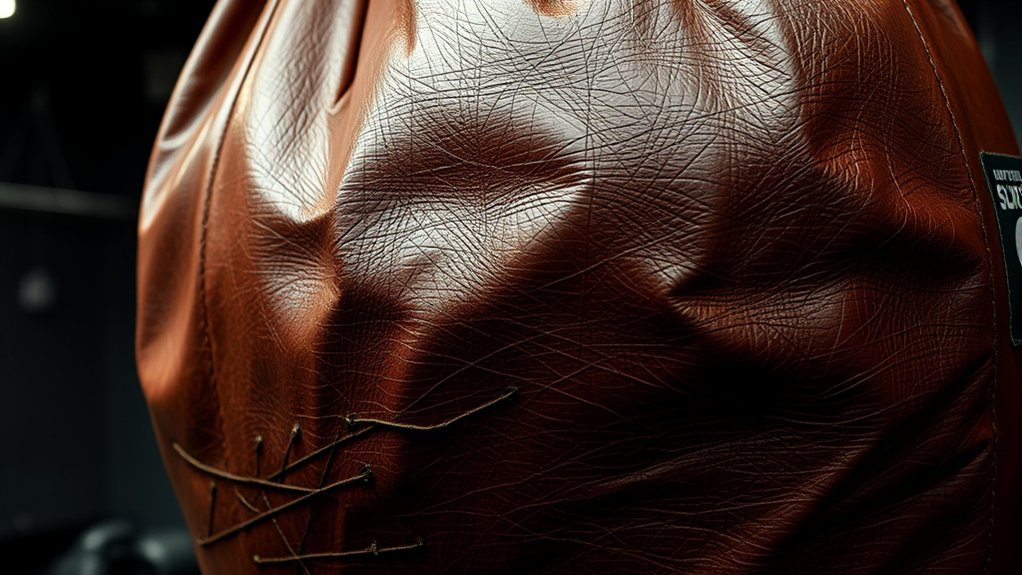
What Is in a Boxing Bag and How Does It Affect Training?
A boxing bag’s filling, like shredded textiles, foam, sand, or water, directly changes how it feels and performs during your workout. Lighter fillings offer more swing and softer impact, which is great for beginners focusing on technique. Heavy sand adds stability and resistance for power training.
Foam cushions your joints, and water lets you adjust weight easily. Picking the right fill helps you train smarter and avoid injury. It’s worth exploring how each option fits your goals and skill level for better results.
What’s Inside a Boxing Bag? Common Fill Materials
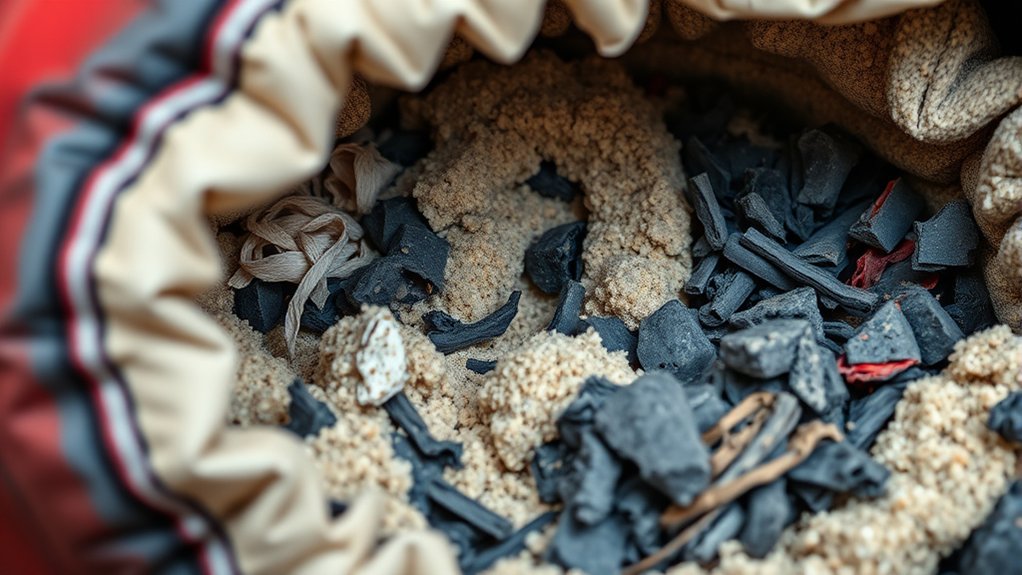
When you choose a boxing bag, knowing what’s inside matters because the fill material directly shapes your training experience.
Boxing bags commonly contain shredded textiles, foam, sand, water, or a mix of these. Shredded textiles provide a consistent striking surface, mimicking the feel of hitting muscle, while foam helps absorb shock and reduces joint strain.
Sand increases the bag’s density and stability, making it perfect for power training. Water-filled bags offer a softer surface with adjustable weight, adapting to your needs. Mixed fillings combine sand, cloth, and foam to deliver a firm yet forgiving feel appropriate for various skill levels.
Each fill material affects the bag’s weight, resistance, swing, and durability.
How Different Boxing Bag Fillings Affect Weight and Feel
You’ll notice that the type of filling in your boxing bag actually changes both its weight and how it feels when you hit it.
For example, heavier materials like sand give you solid resistance, making your punches feel more impactful.
On the other hand, softer fillings such as foam absorb more shock, which can be easier on your hands and joints.
Knowing these differences can help you pick the right bag that fits your training style and goals perfectly.
Weight Variations By Filling
Although the type of filling might seem like a minor detail, it fundamentally shapes your boxing bag’s weight and how it feels during training.
Weight variations depend heavily on the filling type you choose, which directly influences your training dynamics.
For example, sand-filled bags are dense and heavy, providing a stable target ideal for power punches. Water-filled bags offer adjustable weight and are easier to transport when emptied.
Textile scraps create a consistent, dense feel that mimics striking muscle, perfect for beginners focusing on technique without excessive resistance.
Foam fillings absorb shock well, reducing joint strain but offering less resistance.
Each filling alters the bag’s swing and response, so selecting the right one tailors your training experience to your specific goals and style.
Impact Feel Differences
Since the filling type shapes how your boxing bag responds to each strike, it directly impacts your training experience.
Heavy bags filled with textile scraps offer a consistent impact feel that mimics hitting muscle, helping reduce joint strain.
Sand-filled bags feel denser and provide solid resistance, making your punching bag great for developing power and strength.
Water-filled bags deliver a forgiving impact feel, simulating body hits while allowing adjustable weight and quieter workouts.
Foam fillings keep the bag’s shape and offer smooth hits but may lack the resistance needed for advanced training.
Choosing the right filling guarantees your bag stays stable and effective, so your punches land with the right feedback.
Understanding these impact feel differences lets you pick a bag that best suits your training goals.
It’s all about finding what feels right for you and your style.
Textile, Foam, Sand, and Water Fillings Compared
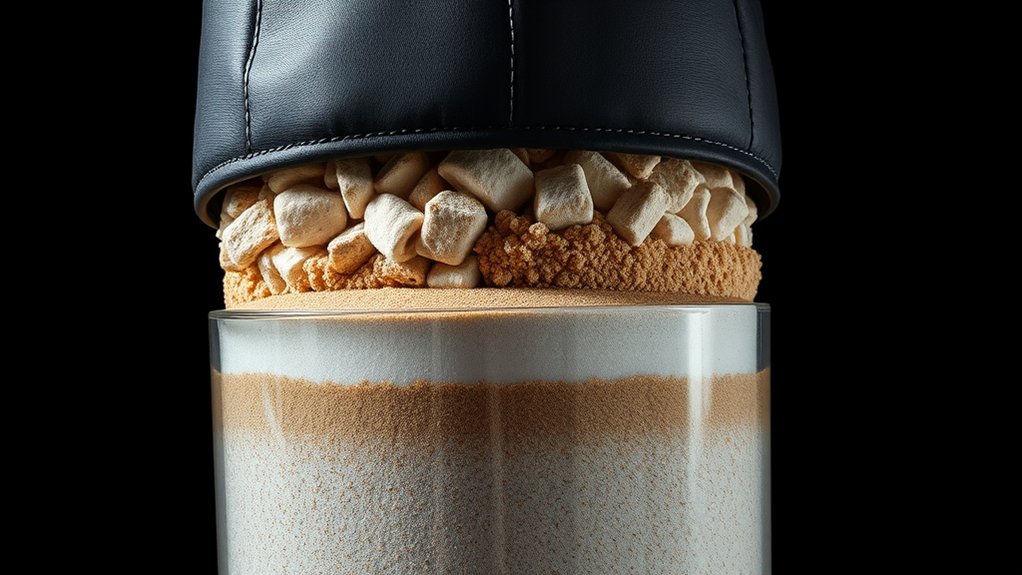
Choosing the right filling for your boxing bag can really impact your training experience.
Textile fillings are made from shredded fabrics and offer a dense, consistent strike that feels like hitting muscle. This makes them perfect if you’re just starting out.
Foam fillings absorb shock well, which helps protect your joints. But they mightn’t give you the resistance you need for power punches.
Sand fillings add weight and firmness, giving your bag stability and a grounded feel. This works great for power punchers but can be too hard if you’re a beginner.
Water-filled bags stand out because their weight is adjustable and they’ve a realistic body-like feel. Plus, they’re easier to transport when empty.
Understanding these options helps you pick a bag that matches your training goals and skill level.
How Boxing Bag Fillings Impact Swing and Stability
The density of your boxing bag’s filling directly controls how much it swings and how stable it feels during your workout.
Heavier fillings reduce movement, giving you a solid target. On the other hand, lighter fillings allow more swing, which is great for practicing timing and footwork.
Filling Density Effects
Although you might not notice it at first, the density of a boxing bag’s filling plays an essential role in how much the bag swings and how stable it feels during your training. A heavy bag with dense fillings like sand offers minimal swing and firm resistance, giving you a solid impact feel.
Lighter fillings such as foam increase movement, which can help improve timing but reduce stability. Water-filled bags provide adjustable weight and softer impact, easing joint strain. Mixed fillings balance power and technique, maintaining shape while offering varied feedback.
| Filling Type | Density | Swing | Impact Feel | Stability |
|---|---|---|---|---|
| Sand | High | Low | Firm | High |
| Foam | Low | High | Soft | Low |
| Water | Adjustable | Moderate | Soft | Moderate |
| Shredded Textiles | Medium | Moderate | Molding | Medium |
| Mixed Filling | Balanced | Balanced | Balanced | Balanced |
Bag Movement Control
When you pick a boxing bag, its filling directly controls how much the bag swings and how stable it feels when you strike it. For effective bag movement control, understanding these differences helps tailor your training styles.
Water-filled bags offer adjustable weight and softer impacts, making them easier to control and great for fluid hitting the bag drills.
Sand-filled bags, being denser and heavier, swing less and provide a solid, stable target ideal for power training but can be tough on beginners.
Textile scrap-filled bags mimic muscle feel, offering consistent resistance while maintaining stability. They’re perfect for refining punch accuracy.
Mixed fillings blend firmness and forgiveness to balance swing and resistance, accommodating various training styles.
Choosing the right filling means you control the bag’s movement to best suit your workout goals. It’s all about what works best for you and your training needs.
Choosing the Right Boxing Bag Filling for Your Training Goals
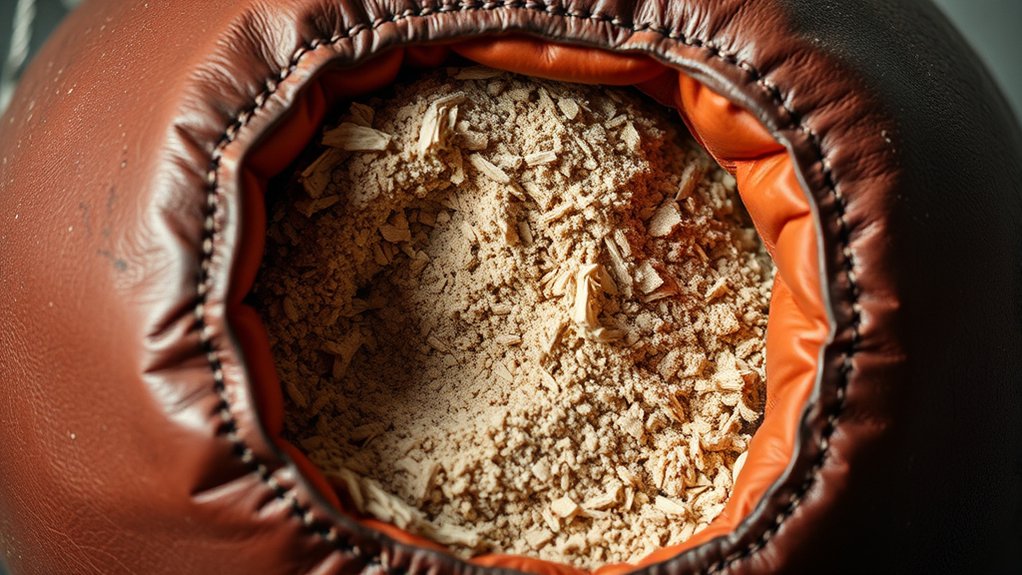
Since your training goals shape how you use a boxing bag, choosing the right filling is essential to maximize effectiveness and safety. The filling directly impacts the bag’s weight, resistance, and feel, tailoring your workouts to your needs.
Choosing the right boxing bag filling tailors weight, resistance, and feel to maximize training effectiveness and safety.
Consider these common options:
Textile filling offers a consistent surface, ideal if you focus on hand protection and technique as a beginner.
Sand filling increases density and stability, perfect for power training and building resilience.
Water filling allows adjustable weight with a forgiving impact, great for joint health at any skill level.
Mixed fillings combine materials like sand and foam to create a firm yet forgiving surface, enhancing versatility and overall training experience.
Match your boxing bag filling to your training goals for best results.
Benefits of Pre-Filled Versus Custom-Filled Boxing Bags
When you’re deciding between pre-filled and custom-filled boxing bags, convenience plays a big role.
Pre-filled bags are super handy because they come ready to use right out of the box—no extra work needed. On the other hand, if you like having control over your equipment, custom-filled bags let you adjust the weight and feel exactly how you want them.
So, it really comes down to what suits your training style best. If you want something quick and easy, go with pre-filled. But if you prefer to tailor your bag to your specific needs, custom-filled is the way to go.
Knowing these differences can help you pick the perfect bag to boost your performance.
Convenience And Setup
Although setting up a boxing bag can be time-consuming, pre-filled options like those from Hayabusa let you start training immediately without any hassle.
Pre-filled bags offer unmatched convenience, especially if you want to focus on your workout rather than setup.
Here’s why they stand out:
- No need for filling or adjusting weight. Just hang and train.
- Multi-density padding simulates real opponent resistance for effective training.
- Durable exteriors withstand repeated impacts, ensuring long-lasting use.
- Saves space and avoids mess in your training area.
Choosing pre-filled bags means you skip the time-consuming setup and get straight into training.
This makes them ideal for busy schedules and those valuing convenience over customization.
Customization And Performance
Deciding between pre-filled and custom-filled boxing bags can really shape how you train and progress. Pre-filled bags come with consistent weight and multi-density padding, which helps improve your technique and makes training effective right away.
Custom-filled bags, on the other hand, let you tailor the weight and materials. This creates a personalized training experience that really fits your style and goals.
| Feature | Pre-Filled Bags |
|---|---|
| Setup | Ready to use |
| Weight | Fixed, consistent |
| Impact Feel | Simulates real opponent resistance |
| Customization | Limited |
If you choose custom-filled bags, you can adjust the swing and resistance. This boosts your training effectiveness and changes up workout dynamics.
How Boxing Bag Fillings Affect Durability and Maintenance
Since the filling inside a boxing bag directly impacts how it wears over time, you need to choose wisely to guarantee durability and ease of maintenance. The type of filling affects the bag’s durability and how often you’ll need to maintain it.
For example, sand adds density and stability but can make the bag heavier and harder to adjust. Water softens impact, reducing wear on the bag and your joints but requires regular checks for leaks.
Textile scraps offer a moldable, consistent surface that extends the bag’s lifespan when packed evenly. Foam keeps shape and smoothness but may wear out faster under intense use.
Regular maintenance like checking filling distribution and securing chains guarantees your bag stays durable and performs well throughout training.
Common Mistakes to Avoid When Filling or Buying a Boxing Bag
Choosing the right filling for your boxing bag doesn’t just affect its durability. It also impacts your safety and training quality. Avoid these mistakes to maximize your heavy bag’s training effectiveness:
| Mistake | Impact | Solution |
|---|---|---|
| Using sand-filled bags | Too dense for beginners | Opt for textile or water filling |
| Inconsistent packing | Creates hard spots, risks injury | Pack evenly or buy pre-filled |
| Ignoring training style | Mismatch hinders progress | Match filling to your goals |
| Skipping proper weight check | Instability and strain | Guarantee balanced filling weight |
Matching Boxing Bag Fillings to Your Skill Level
When you match your boxing bag filling to your skill level, you’ll get the most out of every training session.
Choosing the right punching bags enhances your boxing training and helps you develop efficiently.
Selecting the proper punching bag boosts your training effectiveness and supports skill development.
Here’s how to select based on skill level:
- Beginners should use textile-filled bags for a forgiving surface that absorbs impact and minimizes injury.
- Intermediate fighters benefit from mixed fillings like sand and foam, balancing resistance for power and technique.
- Advanced boxers prefer heavy sand-filled bags, offering density and stability for powerful strikes.
- Water-filled bags suit multi-sport athletes or those recovering, providing adjustable weight and shock absorption.
Why Boxing Bag Filling Matters for Workout Quality and Injury Prevention
Although many focus on bag size and material, the filling inside your boxing bag plays an essential role in shaping your workout quality and preventing injuries. The type of filling affects the bag’s weight, swing, and resistance, directly influencing how effective and safe your training sessions are.
For quality boxing, shredded textiles offer a consistent surface that mimics real muscle, improving technique and aiding injury prevention. Water-filled bags provide adjustable weight and softer impact, which is perfect for beginners or injury recovery. Sand-filled bags deliver stability and density, ideal for power training.
Using quality boxing equipment with proper filling, like layered foam, enhances shock absorption and reduces joint strain. Poorly filled bags cause instability and uneven resistance, risking inefficient workouts and potential injuries.
Frequently Asked Questions
How Do I Properly Hang a Boxing Bag for Safety?
To hang your boxing bag safely, use proper hanging techniques by securing it to a sturdy beam or ceiling joist that supports its weight.
Always use heavy-duty chains or straps to allow smooth swinging and prevent damage.
Make sure to follow safety precautions by regularly inspecting the hardware for any signs of wear.
Hanging the bag at the ideal height is important too. The bottom should be around eye level or slightly above.
This setup ensures comfortable strikes and helps reduce the risk of injury during your training sessions.
Taking these steps will keep your boxing bag secure and your workouts safe.
What Gloves Are Best for Use With a Boxing Bag?
For boxing bag training, choose gloves designed specifically for heavy bags. They offer better impact protection features like denser foam padding and reinforced wrist support.
Glove size recommendations usually fall between 12 to 16 ounces to balance protection and mobility. Make sure your gloves fit snugly but comfortably to maintain control and reduce injury risk.
Avoid general training gloves. Heavy bag gloves last longer against repetitive strikes, so they’re a smarter investment for bag work.
How Often Should I Replace My Boxing Bag?
You might think your boxing bag’s immortal, but wear and tear quietly chips away at it.
Ideally, you should replace your bag every 2 to 5 years, depending on training frequency and how well you handle bag maintenance.
If dents, tears, or uneven filling start to show, it’s time for a new one.
Don’t let a worn-out bag sabotage your progress. Keep it fresh for the best punch every time.
Can a Boxing Bag Be Used Outdoors?
Yes, you can use a boxing bag outdoors if it has outdoor durability and weather resistance.
Look for bags made from tough materials that handle rain and sun without getting damaged. This way, your bag offers training versatility, letting you switch locations easily.
Just make sure it’s securely hung and check it regularly for wear.
Using it outside can keep your workouts fresh and motivating while protecting your gear. It’s a great way to mix things up and stay inspired.
What Warm-Up Exercises Complement Boxing Bag Training?
You should start with dynamic stretching to loosen up your muscles and improve blood flow.
Then, incorporate mobility drills like arm circles and dynamic lunges to enhance joint flexibility and prevent injuries.
Shadow boxing is essential to practice your technique and build rhythm before hitting the bag.
These warm-ups prepare your body and mind, ensuring you perform better during your boxing bag training and reduce the risk of strain or fatigue.
Conclusion
Now that you know what’s inside a boxing bag and how each filling affects its weight, feel, and swing, isn’t it clear that choosing the right one can make or break your training? Whether you want stability, durability, or a specific workout intensity, picking the right fill matches your goals and skill level.
So, don’t overlook what’s inside. Your performance and safety depend on it. Ready to train smarter?


